Okay, so check this out—
I opened Solana’s explorer and my first impression was messy but promising. There’s raw speed, visible state, and an immediacy that’s hard to ignore. Initially I thought explorers were just for devs and token auditors, but then I started tracing transactions and realized ordinary users can learn a ton about what’s happening under the hood when a swap or mint goes sideways. On one hand the raw RPC logs are a mess, though actually the right explorer surfaces filtered views that make sense of the noise while preserving the auditable trail for deep dives.
Wow, that surprised me a bit.
My instinct said “this is clunky”, but then I found features that smoothed the friction. At first glance the block and slot views look intimidating. Hmm… after poking around a few signatures, patterns begin to emerge that tell you who paid fees and which program failed. I’m biased, but that pattern recognition is where explorers turn from curiosity into a useful tool for daily crypto life.
Whoa, seriously—
Understanding transactions on Solana starts with the signature. Each signature maps to a single transaction and a set of instructions executed by programs. Look at the top of a transaction page and you can see status, block time, fee payer, and confirmations. The logs below show program output, BPF errors, and debug prints if the program emitted them, which is priceless when you’re debugging a failed swap. On the rare occasions when a program panics or hits compute limits you can literally see the stack of events that led to that failure.
Here’s the thing.
Solana explorers expose several overlapping views: transaction, block/slot, account, and program pages. Use the account page to check token balances, rent-exemption status, and PDA ownership. The program page shows recent invocations, instruction counts, and often links to source code or verified program metadata. For NFT folks the metadata and owners list are the quick wins. If you’re tracking a complex cross-program transfer, the instruction breakdown is your breadcrumb trail to follow each state change.
Really?
Yes, and analytics matter differently than raw inspection. Charts and heatmaps let you compare activity across time and cluster types. On-chain analytics highlight throughput trends, fee spikes, and whale movements that raw transaction lists hide. I used analytics once to spot an exploit pattern before it hit my wallet, and that saved me the hassle of a frantic private key rotation. Not guaranteed for everyone obviously, but having the data early can be decisive.
Hmm… somethin’ felt off.
One of the things that bugs me is the inconsistency between explorers in naming and UI. Different explorers refer to the same field in slightly different ways, which confuses newcomers. Sometimes the token transfer is clear, sometimes it’s nested inside a memo or custom program call and you need to decode it. A tiny bit of knowledge about the SPL Token program, associated token accounts, and how lamports map to SOL goes a long way to reduce that confusion. Also very very helpful: learn to read the log lines—developers and analytics both rely on those logs more than they admit.
Okay, so here’s a concrete workflow.
When you get a suspicious transaction signature, start at the top: check status and fee payer. Next, inspect each instruction and note the invoked program IDs and accounts. Then scan the log output for “Program log:” or stack traces to find failures or warnings. If it’s a token transfer, confirm that the destination is an associated token account and not a raw system account, because many failed transfers stem from missing ATAs. Finally, cross-reference the block time with network-wide metrics to see if there was congestion or a rent-related race.
Whoa, that chain of thought helped me a lot.
Decoding instructions is a little like reading a recipe: the program ID tells you which cookbook, and the instruction data are the ingredients. Exploiters often reuse similar instruction shapes, so analytics that cluster by instruction signature can flag suspicious repeats. For example, bots that snipe liquidity or perform front-running will leave signature patterns across programs and accounts. On the other hand, legitimate arbitrage looks similar in some technical fingerprints, so you must combine heuristics rather than trust a single signal.
I’ll be honest…
I don’t fully trust heuristics alone, and I’m not 100% sure any automated rule catches everything. Initially I thought blacklists and simple filters would work, but then clever obfuscation proved otherwise. Actually, wait—let me rephrase that: automated flags are useful as first alerts, though human review still separates noise from real threats. That human-in-the-loop step is why explorers that surface context are superior to raw dumps.
Seriously?
Yes—transaction traces also reveal fee flows. You can see who paid how much, and when fees spike a lot of smaller transactions could be the sign of a bot swarm. For high-value transfers, the fee payer often gives insight into intent: a program might subsidize fees, or a relay service might be paying for meta transactions. Knowing the typical fee ranges for the network, and watching compute unit usage per instruction, helps you interpret whether a high fee was accidental or deliberate.
Wow, I love that part.
Another practical piece: watch out for durable recent blockhashes vs. nonces when following transaction replays. Explorer pages sometimes show a “recent blockhash” field and whether a transaction was processed during a blockhash rotation, and that matters for failed retries. If multiple near-duplicate signatures appear, it can indicate a client re-sent the same transaction during network hiccups. That often leads to partial state updates or duplicate token mints if programs don’t guard against idempotency.
Hmm, little tangents here (oh, and by the way…)
Program Derived Addresses (PDAs) are everywhere on Solana and explorers often display the seeds used when accounts are verified. Understanding PDA ownership is key for contract security and for verifying who can mutate state. If you see a PDA tied to a program that you don’t recognize, that’s a red flag until you confirm the code. Also note that rent and lamport balance details can explain why an instruction failed when an account didn’t meet rent exemption thresholds.
Here’s the thing.
For analytics at scale, exportable CSVs and API endpoints matter more than pretty charts. If you want to run custom detection or feed dashboards, you will pull data programmatically. Many explorers provide APIs or CSV exports for transaction lists, token transfers, and program events. I connected a small pipeline once to look for local arbitrage opportunities across DEXes and that live feed made decision loops far faster. The tradeoff is you must handle rate limits and RPC reliability carefully.
Whoa, check this out—
There’s also a behavioral dimension: who interacts with whom, and at what cadence. Graph views of account relationships illuminate central hubs and bridges, and sometimes reveal wrapped or intermediary accounts used by mixers. Not all hubs are malicious; many are services like centralized exchanges or liquidity aggregators. Still, when a previously quiet account starts moving funds into a chain of new PDAs, that warrants a closer look.
Okay, one more practical tip.
If you’re troubleshooting failed NFT minting, look at the metadata program interactions and the order of associated token account creation. Most mint failures are caused by race conditions where the ATA isn’t created by the time the mint instruction runs. Retry logic helps, but better is idempotent sequencing in the mint flow so that creation and mint are atomic or guarded by checks. That small engineering adjustment cuts support tickets drastically, trust me.
I’ll be frank—
Explorers are not perfect legal evidence, though they are often the best technical trail available. Slot timestamps and confirmations are useful, but legal standards require chain-of-custody and additional off-chain logs in many contexts. On the privacy side, remember that anything on-chain is public forever; explorers simply make that permanence easier to navigate. If you’re privacy-conscious, design your interactions with that reality up front.
Check this out—
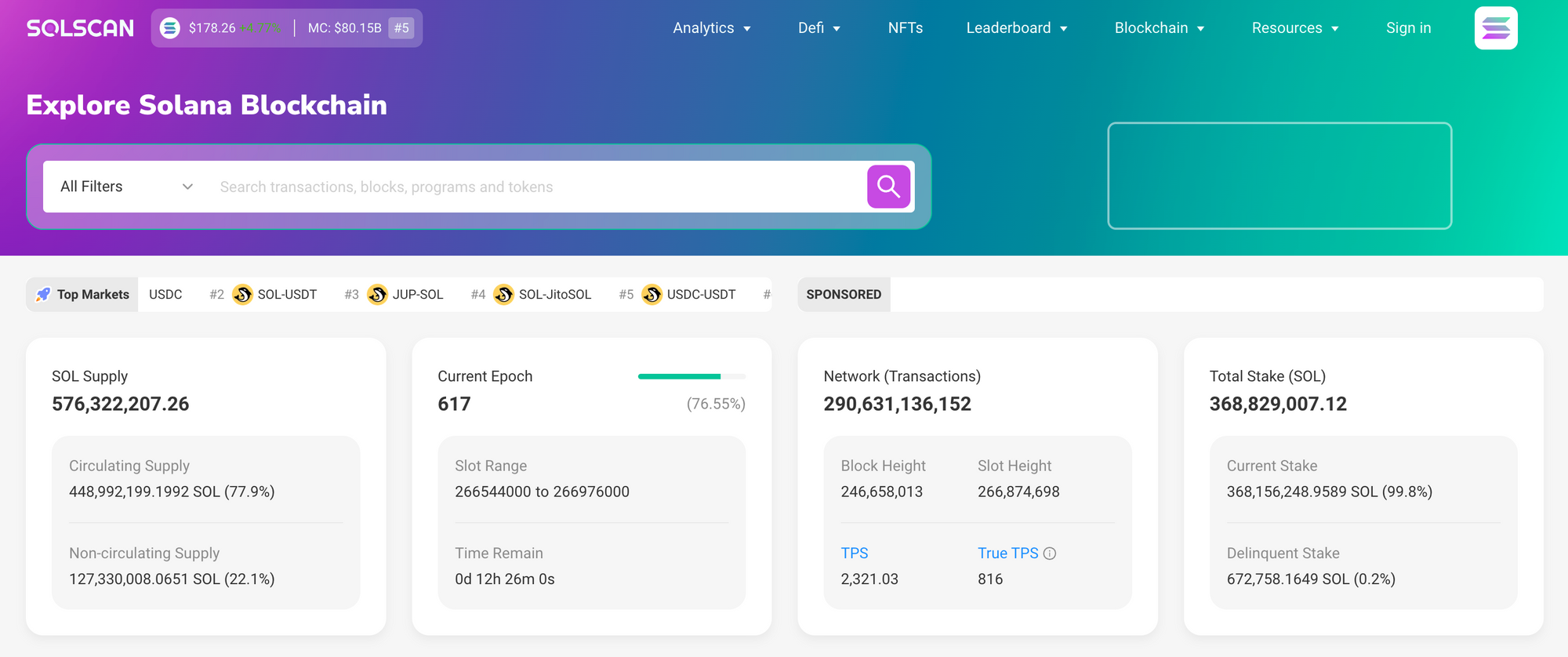
For day-to-day use I’d recommend a couple of habits: always copy the signature string when something odd happens and paste it into the explorer, keep a short list of trusted program IDs for quick lookup, and save patterns of normal activity for your addresses so deviations stand out. And if you want to try a solid, community-supported explorer, start here—it will give you a familiar baseline for many of the examples above.
FAQ
How do I decode a transaction instruction?
Start by identifying the program ID in the instruction, then consult that program’s docs or on-chain metadata; many explorers also decode common programs like the SPL Token program automatically. If decoding isn’t automatic, the instruction data needs a program-specific parser, which you can often find in the program’s repository or SDK.
What does “finalized” mean on Solana explorers?
Finalized indicates that the cluster has reached consensus on the block containing the transaction and it’s very unlikely to be rolled back; other statuses like confirmed are weaker. Use finalized when you need maximal certainty, though confirmed is often sufficient for UX-oriented flows.
Why did my token transfer fail even though I had enough SOL for fees?
Common causes are missing associated token accounts, insufficient lamports for rent exemption, or program-level checks that reject the operation; check the transaction logs to see the specific error and the accounts involved. In many cases the log line names the SPL Token error or a custom program assertion that failed.